

Back
E-commerce


E-commerce
Sylius Creators and Investors Acquire PrestaShop: What It Means for Thousands of Online Stores
A significant transaction has taken place in the European e-commerce technology market — one that could become a turning point in the competitive landscape of major platforms.
The open-source e-commerce platform PrestaShop has been acquired for approximately €55 million by the Polish technology company cyberFolks.pl, together with the creators of Sylius and the technology firm BitBag , taking over from its previous owner, logistics group Fortidia .
The completion of the transaction was officially announced on February 18 via LinkedIn. The news surprised even some PrestaShop employees and sparked discussion across the technology community. Some view it as a strategic breakthrough, others as a potential market reshuffle.
A Deal That May Reshape the Open-Source E-commerce Landscape
“This transaction should be seen as a strategic move that could accelerate technological consolidation and fundamentally reshape competition among open-source e-commerce platforms in Europe,” says Ricardas Smaizys , one of the first developers in Lithuania to work with PrestaShop more than 15 years ago and founder of the e-commerce solutions agency PrestaRock.
PrestaRock is an official partner agency in Lithuania working with both PrestaShop and Sylius.
According to Šmaižys, this is not merely a change of ownership — it represents an attempt to establish a new technological center within the European e-commerce ecosystem.
A Strategic Step Toward a Larger Market
Sylius is recognized as a powerful and flexible technology platform, primarily suited to larger, more complex projects. However, its market reach has historically been more niche.
By acquiring PrestaShop, the new owner gains access to one of the largest small- and mid-sized-business user bases in Europe.
“Knowing that Sylius’ founders are highly ambitious, technology-driven leaders, the acquisition of PrestaShop appears to be a calculated strategic move to access a broader merchant base and potentially offer Sylius as a natural growth path for existing PrestaShop users. This is not accidental — it is a deliberate expansion strategy,” Šmaižys explains.
Until now, PrestaShop has remained one of the most popular platforms across Europe and Lithuania among small and medium-sized businesses, while Sylius has been chosen more frequently by companies with advanced technical requirements.
Community Expectations: A Technological Boost
PrestaShop CEO Olivier Binet publicly commented that the announcement was made only after all legal procedures had been finalized.
The broader technology community has largely responded positively, expecting that Sylius’ modern architectural foundation could accelerate PrestaShop’s development.
“This could translate into faster updates, more modern functionality, and stronger competitiveness,” says Šmaižys.
According to him, increased engagement from the new ownership is already visible.
Previous Ownership Did Not Deliver Breakthrough Growth
PrestaShop was acquired in 2021 by MBE Worldwide, later rebranded as Fortidia. However, the anticipated synergy between logistics operations and the e-commerce platform did not fully materialize.
“The new owners are technology-led organizations. This suggests that the primary focus will return to platform innovation rather than peripheral services,” Šmaižys notes.
The transaction was initiated by Sylius founder Mikołaj Król together with investors from cyberFolks.pl.
Should PrestaShop Users Be Concerned?
One of the most common questions is whether the two platforms will be merged. Experts indicate that such plans are not expected in the near term.
“Both platforms serve different stages of business maturity. PrestaShop is well-suited for small and medium-sized companies seeking faster market entry with lower costs and strong out-of-the-box functionality. Sylius is designed for larger, more complex projects requiring custom architecture, scalability, and high performance — but it also demands greater investment,” explains Šmaižys.
He adds that PrestaShop users can expect continued development, new features, and potentially easier migration to Sylius if their businesses grow.
This creates a clearer long-term growth path for companies starting with a simpler solution and scaling into more advanced infrastructure over time.
The Risk: Could PrestaShop Be Overshadowed?
Market observers remain cautiously optimistic. History has shown that acquisitions can sometimes slow platform development. A frequently cited example is Adobe’s acquisition of Magento, after which parts of the community perceived a shift in strategic priorities.
According to Šmaižys, balance will be key.
“If both platforms continue to be developed in parallel, the ecosystem benefits. If focus were to shift exclusively toward Sylius, PrestaShop could gradually lose strategic momentum. Ultimately, the long-term success of this acquisition will depend on maintaining strategic balance — a responsibility that now rests with the new owners,” he says.
What This Means for E-commerce Businesses
For current PrestaShop users, the deal primarily signals stability combined with growth potential. The platform will continue to operate without structural disruption.
Users may experience accelerated technological progress, including more frequent updates, new features, and improved system performance.
For companies where e-commerce has become a critical infrastructure, the most important takeaway is continuity: a platform that remains stable while offering a clearer long-term development path within the same technological ecosystem.
A New European E-commerce Technology Hub?
The acquisition also reflects a broader trend — the strengthening role of Polish technology companies in the European digital economy.
By combining cyberFolks.pl, Sylius, BitBag, and PrestaShop, one of the largest open-source e-commerce ecosystems in the region, is being formed.
“This may lead to stronger competition against global SaaS players and accelerate innovation within Europe,” concludes Šmaižys. “For businesses using PrestaShop, the key message is simple: your platform is not going anywhere. On the contrary, it is likely to evolve faster than ever.”
About Ričardas Šmaižys
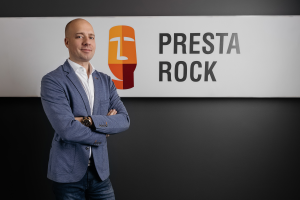
Ričardas Šmaižys is one of the first developers in Lithuania to have been working with PrestaShop for more than 15 years. He holds both Bachelor’s and Master’s degrees in Programming from Kaunas University of Technology (KTU) and gained international experience while working with one of the largest PrestaShop agencies in the United States at the time, Presto-Changeo.
He is the founder and CEO of PrestaRock, an e-commerce development agency specializing in PrestaShop and Sylius solutions. With more than a decade of experience building complex online commerce systems, he focuses on helping businesses make technology decisions that are sustainable, scalable, and cost-efficient.
Ričardas positions himself as a technical strategist — guiding companies on how to build e-commerce platforms without unnecessary budget waste, ensuring that technology becomes a growth driver rather than a marketing checkbox.
About PrestaRock
PrestaRock is a Lithuania-based e-commerce development agency and official partner of both PrestaShop and Sylius. The company delivers custom online commerce solutions for mid-sized and enterprise-level businesses across multiple industries, including automotive, pharmacy networks, beauty, beverages, and B2B sectors.
With a team of experienced developers trained in both ecosystems, PrestaRock focuses on building high-performance, scalable platforms using its proprietary framework approach. This enables faster implementation cycles and cost-efficient project delivery without compromising code quality.
Operating with strong engineering principles and long-term partnership values, PrestaRock supports businesses in designing, developing, and evolving their e-commerce infrastructure in line with international best practices.
Why Choose Us?
We are e-commerce professionals and building PrestaShop online stores since 2008.
We Solve Your Business Problems
Fast, Scalable, High-Quality Code
Human-Centered UI & UX
24/7 Technical Support
No e-shop is useful without understanding the business behind it. We analyze internal processes, define customer profiles, conduct competitor research, and set measurable goals to ensure success in the omnichannel world.
Every part of an e-shop, from integrations to search and checkout, must work seamlessly. Our experienced developers ensure fast, scalable, and high-quality code for optimal performance.
High conversion rates are achieved through strategic information architecture and exceptional design. Our expertise in UI/UX ensures a seamless connection between your business and your customers.
E-commerce is a constantly evolving system that requires 24/7 technical support and quick response times. Our support agreement ensures a 1-hour reaction time to critical bugs.


Why Choose Us?
Thinking about a new project? Let's make it happen!
Start now
